.svg)



Moving beyond "URL blocking" to a comprehensive governance framework for autonomous agents, local models, and the unmanaged supply chain.
For the past few years, AI governance has largely focused on the front door: controlling access to public chatbots. Corporate policy teams spent 2023 and 2024 writing guidelines for browser-based usage, effectively treating AI as a "website" problem.
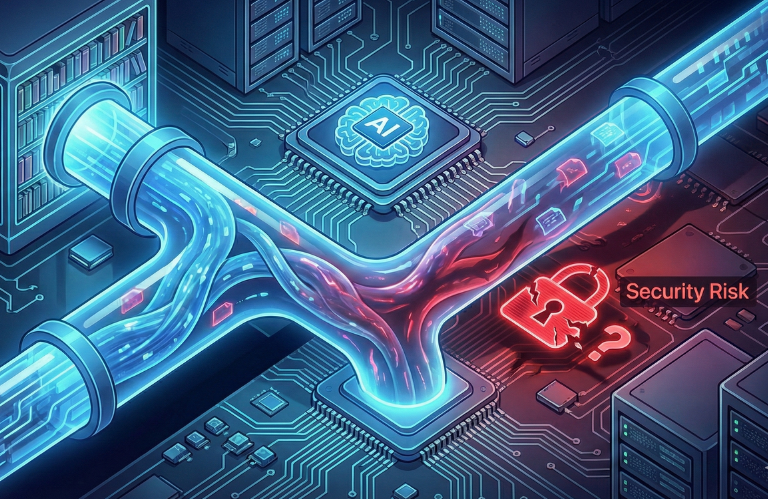
But while organizations were busy monitoring web traffic, the technical landscape shifted. We are no longer just dealing with "Shadow Users" employees pasting text into a web interface. We are now dealing with a Shadow Architecture.
In 2025-2026, technical teams are deploying unvetted local models, spinning up autonomous agents with system-level permissions, and embedding unauthorized API keys directly into production code. This creates a "Shadow Supply Chain" that bypasses traditional procurement, security reviews, and data governance controls.
The risk is no longer just data leakage; it is infrastructure integrity.
Effective governance in this new era requires more than a written policy; it requires a structural shift in how we discover, evaluate, and manage AI assets across the enterprise.
Part 1: The New Governance Gap
The challenge for leadership is that modern Shadow AI operates in areas where traditional IT visibility is low. It hides in the developer’s local environment, in the code repository, and in the supply chain.
1. The Unmanaged Model Supply Chain
Developers are increasingly treating AI models like software libraries. They download open-source model weights to run experiments locally or to fine-tune for specific tasks. From a governance perspective, downloading a model is not just downloading data it is downloading an executable binary.
- The Security Risk (Deserialization): Many model formats function similarly to archives that execute code upon unpacking. Without a rigorous supply chain policy, teams introduce unvetted, "black box" code into the environment. This bypasses software composition analysis (SCA) tools, which are designed to scan code, not weights, creating a blind spot where malicious payloads can hide.
- The Legal Risk (License Contamination): Not all open models are open for commercial use. A developer might unknowingly use a model with a "Non-Commercial" or "Research Only" license to build a production feature. If that feature ships, the organization is exposed to immediate legal liability and intellectual property disputes.
2. "Off-Grid" Local Inference
Newer tools allow powerful AI models to run entirely on a developer’s laptop (the "Local LLM" stack), completely disconnected from the corporate network or cloud environment.
- The Data Silo Problem: Traditional Data Loss Prevention (DLP) relies on inspecting network traffic. When processing happens locally, data policies effectively vanish. Sensitive internal data can be processed, stored, and potentially mishandled on a local device with zero audit logs.
- The "Fragmentation of Truth": When different teams use different unvetted local models, they get inconsistent results. One team might use a model optimized for Python, another for Java, leading to "it works on my machine" issues at the AI level.
3. The "Shadow Workforce" (Autonomous Agents)
We are moving from passive AI (which waits for a user prompt) to active agents (which are given a goal and autonomy to achieve it).
- The Agency Risk: An autonomous loop that has permission to read files, write code, or execute commands is effectively a "digital employee" operating without a contract. Governance frameworks often fail to define the "limits of agency."
- Privilege Escalation: If a developer grants an agent their own API keys or SSH access to "get the job done," that agent inherits those permissions. A compromised agent can then act with the full authority of a senior engineer, deleting databases or exfiltrating code without triggering standard intrusion detection systems.
4. The "Hidden API Economy" (BYOK)
Shadow AI often bleeds into production codebases through a practice known as BYOK (Bring Your Own Key). To bypass slow procurement processes, developers sign up for personal API keys from external providers and hardcode them into internal applications.
- Operational Fragility: Your enterprise infrastructure effectively depends on a $20/month personal credit card. If the developer leaves the company or the card is declined, production features crash.
- Billing Blindness: The organization has no visibility into the true cost of the AI features being built, making unit economics calculations impossible.
Part 2: The Solution – A "Control Plane" Approach
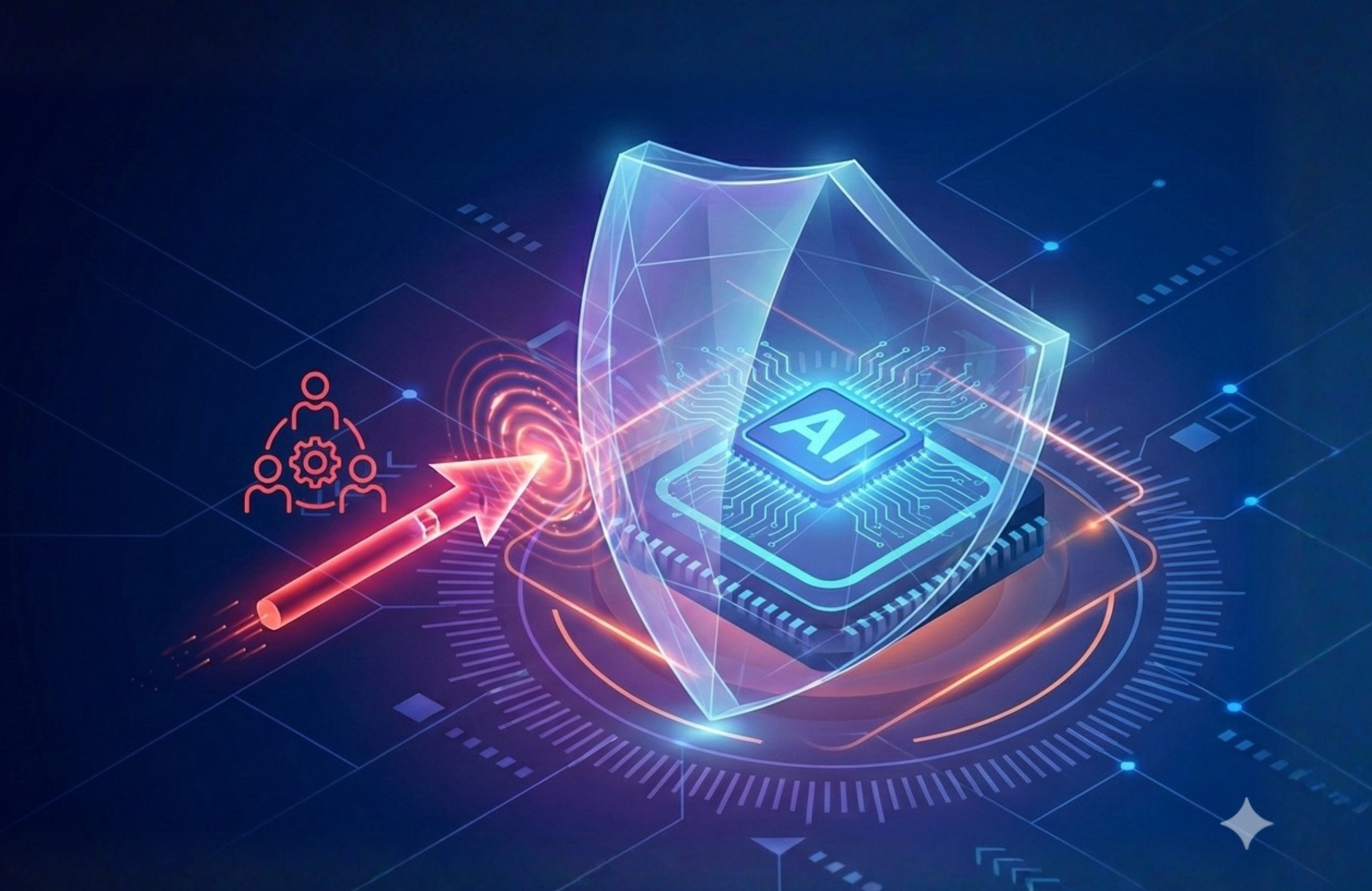
You cannot govern what you cannot see. The solution is not to ban innovation which only drives it further underground but to bring it into the fold through a centralized AI Control Plane.
This approach shifts governance from a "gatekeeper" model (blocking access) to a "guardrails" model (guiding access).
1. Centralized Procurement: The AI Gateway
The most effective governance strategy is to make the compliant path the easiest path. Instead of allowing direct connections to external AI providers, route all traffic through a unified Internal AI Gateway.
- The "Intelligence Firewall": The Gateway acts as a central Policy Enforcement Point. It can inspect prompts for PII (Personally Identifiable Information) and redact them before they leave the secure perimeter.
- Provider Agnosticism: The Gateway allows the organization to swap underlying models (e.g., moving from Provider A to Provider B) without breaking application code.
- Cost Attribution: By issuing internal tokens to teams, the Gateway can track exactly which department, project, or user is consuming AI resources, solving the "Billing Blindness" problem.
2. Supply Chain Governance: The "AI-BOM"
Just as modern security relies on a Software Bill of Materials (SBOM), AI governance requires an AI Bill of Materials (AI-BOM).
- The Trusted Registry: Block direct downloads of binary model files from the public internet. Instead, establish an internal "Artifactory for AI."
- The Scanning Protocol: Before a model enters the registry, it must pass a three-step validation:
- License Scan: Automated check of the model card to ensure commercial viability.
- Security Scan: Cryptographic verification to ensure the weights have not been tampered with.
- Performance Benchmark: A basic check to ensure the model meets internal quality standards.
- The Golden Image: Developers are then restricted to using only these "signed" models for production workloads.
3. Governance of Agency: The Tiered Framework
Not all AI usage carries the same risk. A "one-size-fits-all" policy will stifle innovation. Governance policies should be tiered based on the autonomy of the system.
- Tier 1: Assistive (Low Risk)
- Definition: Human-in-the-loop (e.g., code completion, text summarization).
- Control: Standard logging and PII redaction.
- Tier 2: Augmented (Medium Risk)
- Definition: Human-on-the-loop (e.g., an agent drafts an email, human approves sending).
- Control: Mandatory "Confirmation Steps" hardcoded into the workflow.
- Tier 3: Autonomous (High Risk)
- Definition: No human intervention (e.g., automated patch deployment).
- Control: Strict Sandboxing. These agents must run in ephemeral, non-persistent containers with no network egress access except to whitelisted endpoints. They must operate under "Service Accounts" with least-privilege access, never user credentials.
Part 3: Operationalizing the Culture
Tools alone cannot solve Shadow AI; culture must align with the architecture.
The "Champion" Model
Identify the "Shadow AI" power users the developers already experimenting with these tools. Instead of punishing them, deputize them. Make them "AI Champions" who help vet models for the internal registry. This converts them from security risks into security assets.
The "Safe Sandbox"
Create a sanctioned environment where "Shadow" behavior is allowed. Provide a secure, air-gapped sandbox where developers can download unvetted models and test aggressive agents without risking the corporate network. If they have a safe place to play, they won't play in production.
Conclusion: Governance as an Enabler
The goal of AI governance is often viewed as restrictive, but in the era of Shadow AI, it is protective.
If we ignore Shadow AI, we risk waking up to a supply chain attack or a massive data leak caused by a rogue agent. But if we govern it correctly, we unlock massive velocity.
By establishing a clear framework for how models are ingested, where they are run, and what permissions agents are granted, organizations can move from a posture of fear to a posture of managed risk. We must stop treating Shadow AI as a rogue activity to be punished, and start treating it as a signal that our governance frameworks need to evolve.
Key Takeaways for Leaders:
- Audit your codebases: Scan specifically for API key patterns (e.g.,
sk-...) to find hidden dependencies. - Implement an AI Gateway: Stop "direct-to-provider" traffic immediately to regain visibility.
- Define "Agency": Update your Acceptable Use Policy to explicitly distinguish between "using a chatbot" and "deploying an agent."
- Secure the Supply Chain: Treat model weights with the same scrutiny as third-party binaries.