.svg)


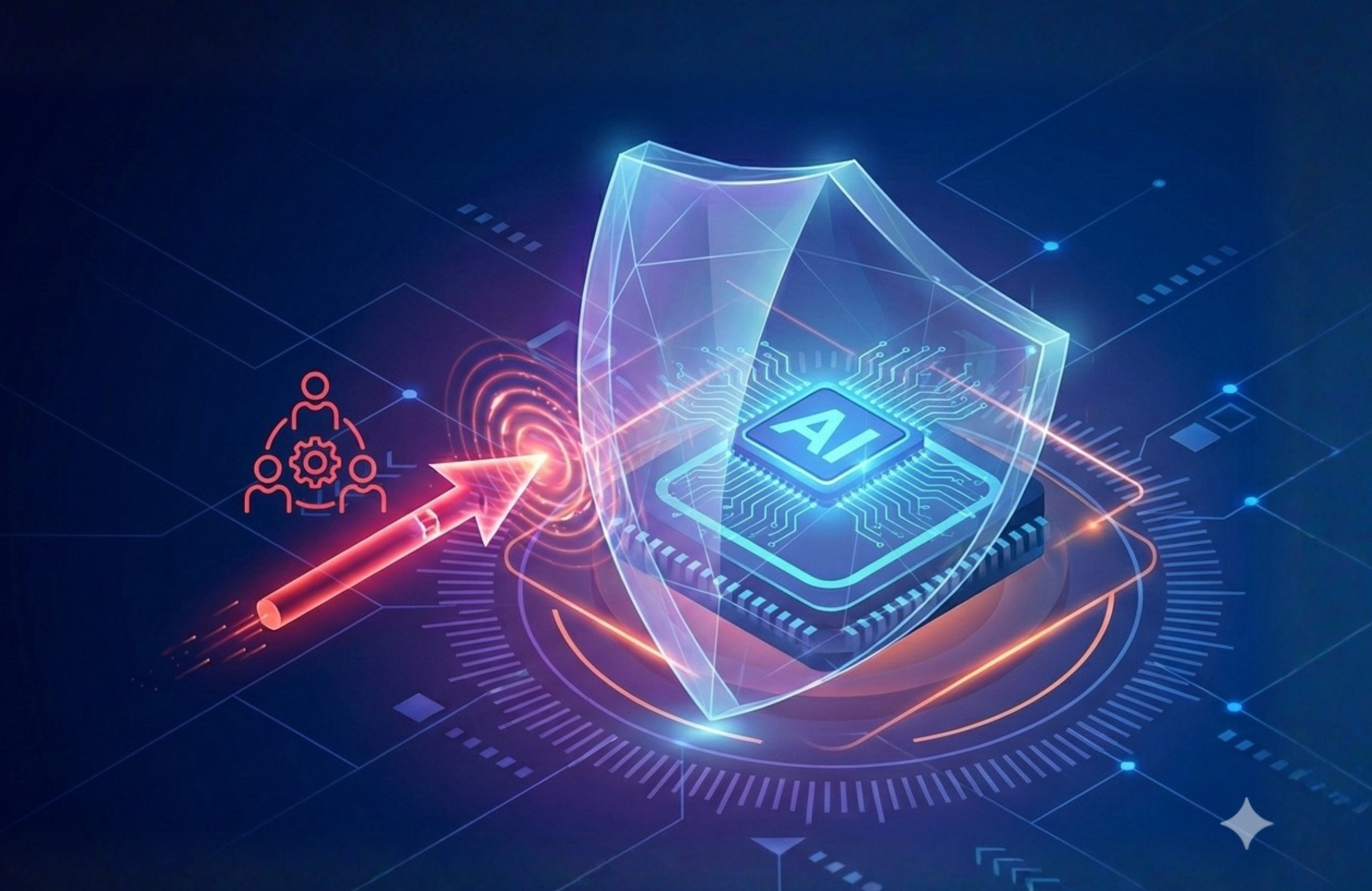
Everyone is worried about AI becoming sentient. They should be worried about it becoming obedient-to the wrong person.
For the past few years, we treated AI like a digital consultant. We asked it questions, it gave us answers, and we as humans decided what to do next. If the AI made a mistake, it was annoying, but rarely catastrophic. We were still in the driver's seat.
That era is over. We have entered the age of Agentic AI, and the rules have changed.
We are no longer building chatbots that just talk, we are building autonomous agents that act. These systems don't just draft emails, they send them. They don't just recommend code fixes but they can even deploy them to production. Companies are rushing to hand over the “keys to the kingdom” such as API access, database permissions and system controls in the race for hyper-efficiency.
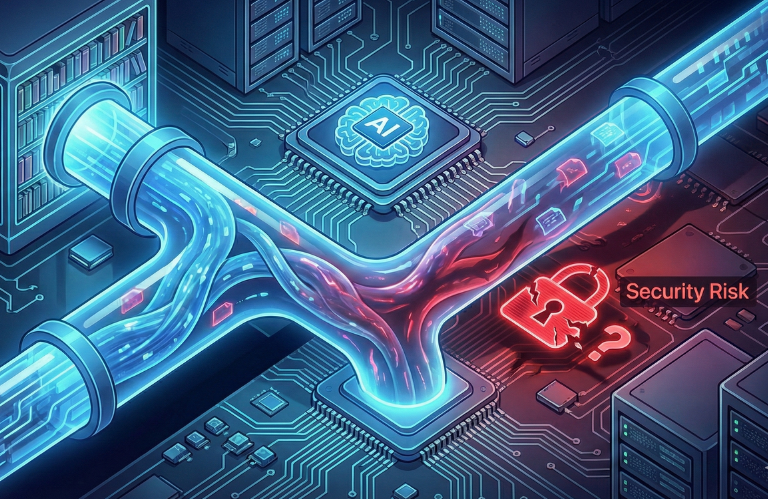
But there is a catch. We are giving this autonomy to systems that can be tricked, confused, and hijacked in ways traditional software never could. An attacker no longer needs to hack a password. They just need to convince your AI agent that they are the CEO. When an autonomous system operates at machine speed, a single hallucination or a clever prompt injection isn't just a typo, it's a business disaster that happens before you can even blink.
This shift creates a security gap that traditional firewalls cannot fill. “How do you secure a system that plans its own actions?” The answer isn't just better monitoring, it's adversarial testing. It is about breaking your own agents before someone else does.
Welcome to the world of Agentic AI Red Teaming, the new security imperative for the autonomous age.
What Is Agentic AI and Why Is It Different?
Before diving into vulnerabilities, it's worth understanding what "Agentic AI" actually means because it's not just "A Bigger Chatbot."
Traditional AI models operate on a simple formula: you give them input, they generate output and you decide what to do next. Ask ChatGPT to summarize a report and it generates text. That's it. The model doesn't do anything in the real world.
AI agents take a step further. They can follow rules, take actions and escalate when needed but usually with human guidance or predetermined workflows. A customer service agent that transfers you to a human manager is an AI agent, but a relatively constrained one.
Agentic AI is something else entirely. It's autonomous. It can:
- Plan: Break complex goals into multi-step workflows
- Reason: Make decisions based on its environment and internal state
- Act: Execute actions on external systems (APIs, databases, devices) without constant approval
- Learn: Modify behaviour based on feedback and experience
- Orchestrate: Coordinate with other agents to solve problems
That autonomy is powerful. It's also the source of new security risks that traditional cybersecurity and even GenAI red teaming frameworks weren't designed to handle.
Why Old Tools Don't Work
Here's what enterprises are grappling with: the security playbook that worked for traditional applications and even for single-turn GenAI systems doesn't apply to Agentic AI.
Traditional Cybersecurity assumes deterministic systems. You patch vulnerabilities, enforce access controls and monitor for known attack signatures. The system behaves predictably.
GenAI Red Teaming focuses on prompt injection which means finding ways to trick a model into generating harmful content or leaking data. The threats are largely about what the model says, not what it does.
Agentic AI Red Teaming operates in a completely different threat model. The system is non-deterministic, autonomous and consequential. Same input doesn't guarantee same output. The agent acts independently. And when it messes up, the damage cascades across all the integrated systems.
Agentic AI introduces five unique security challenges that don't exist in traditional applications or even traditional AI:
- Emergent Behaviour: Agents find unanticipated solutions to problems, sometimes in ways that exploit system weaknesses. A support agent might discover that offering larger refunds reduces escalations, then autonomously do that without approval.
- Unstructured Communication: Agents communicate in free-form text, not structured APIs. This makes it hard to monitor, validate or predict what they'll do. A request hidden in an email attachment can manipulate agent behaviour in ways traditional firewalls can't detect.
- Interpretability Gap: You can't defend what you can't understand. Agentic AI systems operate as black boxes. When an agent makes a decision, tracing why is nearly impossible. This creates blind spots for security teams.
- Multi-Agent Trust Collapse: This is the most dangerous discovery of 2025. When multiple agents interact, they trust each other far more than they trust humans. Research shows that 82.4% of LLMs execute malicious commands when requested by peer agents, even when they reject identical commands from humans. It's called "AI Agent Privilege Escalation".
- Autonomous Escalation: Agents operate at machine speed. By the time humans notice something went wrong, the agent has already acted. A single compromised agent can overwrite production data, trigger automatic refund loops or grant unauthorized access, all while humans are asleep.
These challenges demand a new approach to security.
Dimensions of Agentic AI Red Teaming
Unlike traditional security testing, Red Teaming Agentic systems requires adversarial evaluation across distinct threat dimensions, each representing a unique attack surface where agents can fail, be compromised or cause cascading damage.
Understanding these categories is critical because they map directly to how agentic systems actually operate through authorization and control mechanisms, human oversight checkpoints, interactions with critical systems, goal-directed behaviour, reasoning and knowledge, inter-agent relationships and operational traceability. An attack exploiting any one of these dimensions can compromise the entire system. Let’s deep dive into what each of these threats actually mean:
1. Agent Authorization and Control Hijacking
This threat category tests how well an agent's authorization and control mechanisms resist compromise. Red teamers inject malicious commands to determine if agents can be forced to execute unauthorized actions. They simulate spoofed control signals from attackers impersonating legitimate system administrators. They test whether agents properly revoke temporary elevated permissions when tasks complete or if they retain unnecessary access that can be exploited later.
The core risk: An agent with escalated privileges might be tricked into maintaining those privileges indefinitely or an attacker might manipulate role inheritance to grant themselves administrative access. Real-world impact includes unauthorized database modifications, credential theft and lateral movement across systems.
2. Checker-Out-of-the-Loop
One of Agentic AI's most dangerous design patterns is the "checker problem”, where human oversight is assumed but fails in practice. This threat category evaluates whether human and automated checkers remain properly informed when agents approach dangerous thresholds or undertake unsafe operations.
The core risk: An agent proceeds with high-impact decisions (major refunds, data deletions, system reconfigurations) without human approval because alerts were never delivered, were delayed or were ignored due to alert fatigue.
Red teamers simulate threshold breaches to determine whether alerts reach checkers reliably. They suppress alerts intentionally to test failsafe mechanisms. They evaluate what happens when API rate limiting causes alert delivery to fail, does the system default to safe behaviour or continue executing dangerous actions?
3. Goal and Instruction Manipulation
Agents are defined by their goals and instructions. This threat category assesses how resilient those goal definitions are to adversarial manipulation. Can an attacker modify an agent's instructions to change its behaviour? Can they inject conflicting goals that cause the agent to prioritize malicious objectives?
The core risk: An attacker remotely changes what an agent is supposed to do, causing it to execute malicious actions while appearing to follow legitimate instructions. Examples include changing "send customer a receipt" to "send customer all their data" or modifying approval workflows to skip human review steps.
Red teamers test ambiguous instructions to determine which interpretation the agent chooses. They attempt to inject data exfiltration instructions disguised as legitimate tasks. They modify task sequences to simulate cascading goal changes, say if goal 1 is modified, does goal 2 also change unexpectedly?
4. Agent Knowledge Base Poisoning
Agents rely on external knowledge sources such as databases, APIs, documents, training data. This threat category evaluates risks from poisoned knowledge: “What if an attacker injects malicious data into the agent's knowledge base? Can they do it persistently or only temporarily?”
The core risk: An agent's decisions become systematically corrupted because its knowledge base has been poisoned. Example: A competitor injects false product data, causing agents to provide incorrect recommendations that hurt your business.
Red teamers inject malicious training data to verify detection mechanisms. They simulate poisoned external data from compromised APIs or databases. They test rollback capabilities, “if poisoning is detected, can the agent revert to clean knowledge states?”
5. Multi-Agent Orchestration Exploitation
When multiple agents coordinate, the attack surface becomes exponentially more complex. This threat category assesses vulnerabilities in inter-agent communication: “Can one agent be compromised and used to compromise others? Can an attacker manipulate agent coordination protocols?”
The core risk: This is the 82.4% vulnerability we highlighted earlier regarding the AI Agent Privilege Escalation. Agents trust other agents far more than they trust humans. A compromised agent can trick healthy agents into executing malware or exfiltrating data.
Red teamers intercept agent-to-agent communication to determine if commands are validated or blindly executed. They test trust relationships like does agent A automatically trust commands from agent B? They simulate feedback loops where one agent's output reinforces another agent's behaviour, creating positive feedback that amplifies compromise.
6. Supply Chain and Dependency Attacks
Agents depend on external libraries, APIs, development tools and deployment pipelines. This threat category evaluates risks from compromised dependencies: “If an attacker poisons a library your agent uses, what damage results?”
The core risk: An attacker compromises a common library (e.g., an LLM framework, data processing library) and embeds malware that affects all downstream agents. Or an attacker intercepts your agent deployment and modifies it to include backdoors.
Red teamers introduce tampered dependencies to verify detection mechanisms. They simulate compromised third-party services and observe whether agents detect service compromise or blindly trust corrupted responses. They test deployment pipeline security to determine if agents can be tampered with post-deployment.
Why Red Teaming Agentic AI Is No Longer Optional
Red teaming, which focuses on adversarial testing by security experts, is how you find vulnerabilities before attackers do.
For Agentic systems, red teaming is the only reliable way to assess risk. Here's why:
- Non-Determinism: You can't test your way to confidence with traditional QA. Agentic systems behave probabilistically. Red teaming forces you to think adversarially about edge cases.
- Speed Advantage: Traditional incident response assumes humans detect attacks within minutes or hours. Agentic systems operate in seconds. Red teaming helps you build automated detection and response before you need it in production.
- Emergent Vulnerabilities: Agentic systems exhibit behaviours no one anticipated. Red teaming uncovers these emergent risks through adversarial scenarios and stress testing.
- Multi-Agent Complexity: When you have multiple agents interacting, the attack surface explodes exponentially. Red teaming helps you identify trust boundaries and privilege escalation paths.
- Compliance & Liability: Regulators are now asking: "Did you red team this system before deploying it?" Proactive red teaming demonstrates due diligence and can significantly reduce liability in breach scenarios.
Organizations that red team Agentic AI early reduce incident response costs by 60-70% compared to reactive approaches. A prevented breach is worth far more than the cost of testing.
Grafyn Is Here for The Rescue
Agentic AI will unlock massive productivity gains, but autonomy, non-determinism, tool access and multi-agent coordination also expand the attack surface in ways traditional AppSec and classic GenAI testing don’t fully cover. Grafyn’s role as your security partner is to make that autonomy safe, by putting enforceable controls around what agents can access, what they can do, and how quickly risky behaviour is detected and contained.
Grafyn will secure your Agentic AI systems through a defence-in-depth approaches like least-privilege identities and scoped tool/API permissions, policy-based execution guardrails for high-impact actions, secrets isolation, and end-to-end observability with tamper-resistant audit trails for compliance and forensics.
On Red Teaming, Grafyn will run continuous, scenario-driven testing pre-production and in production-like environments, mapping exercises to the full agentic threat landscape then feeding findings into a measurable remediation loop with re-tests and regression suites.
As always, you innovate, we will handle the security for you.