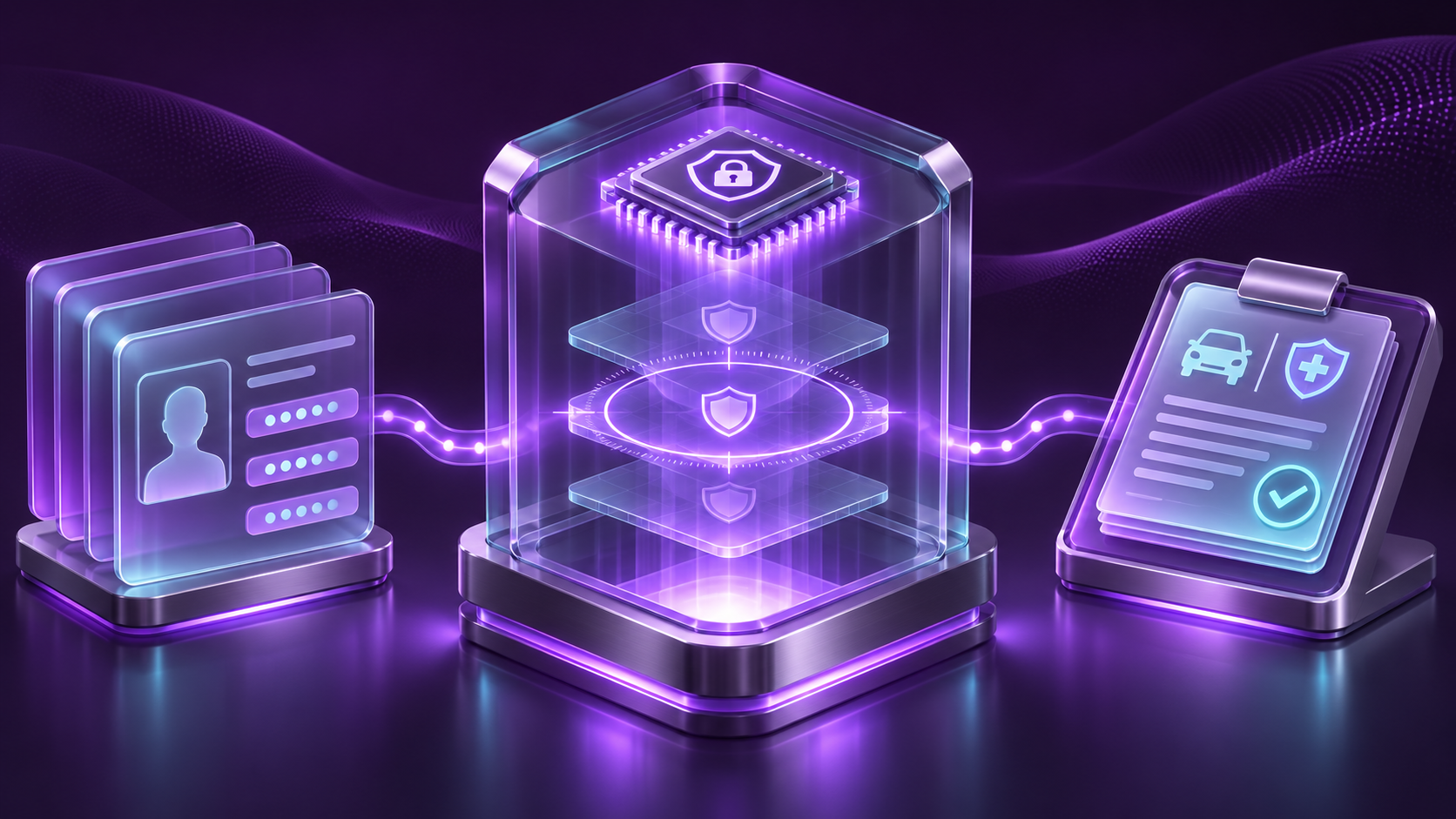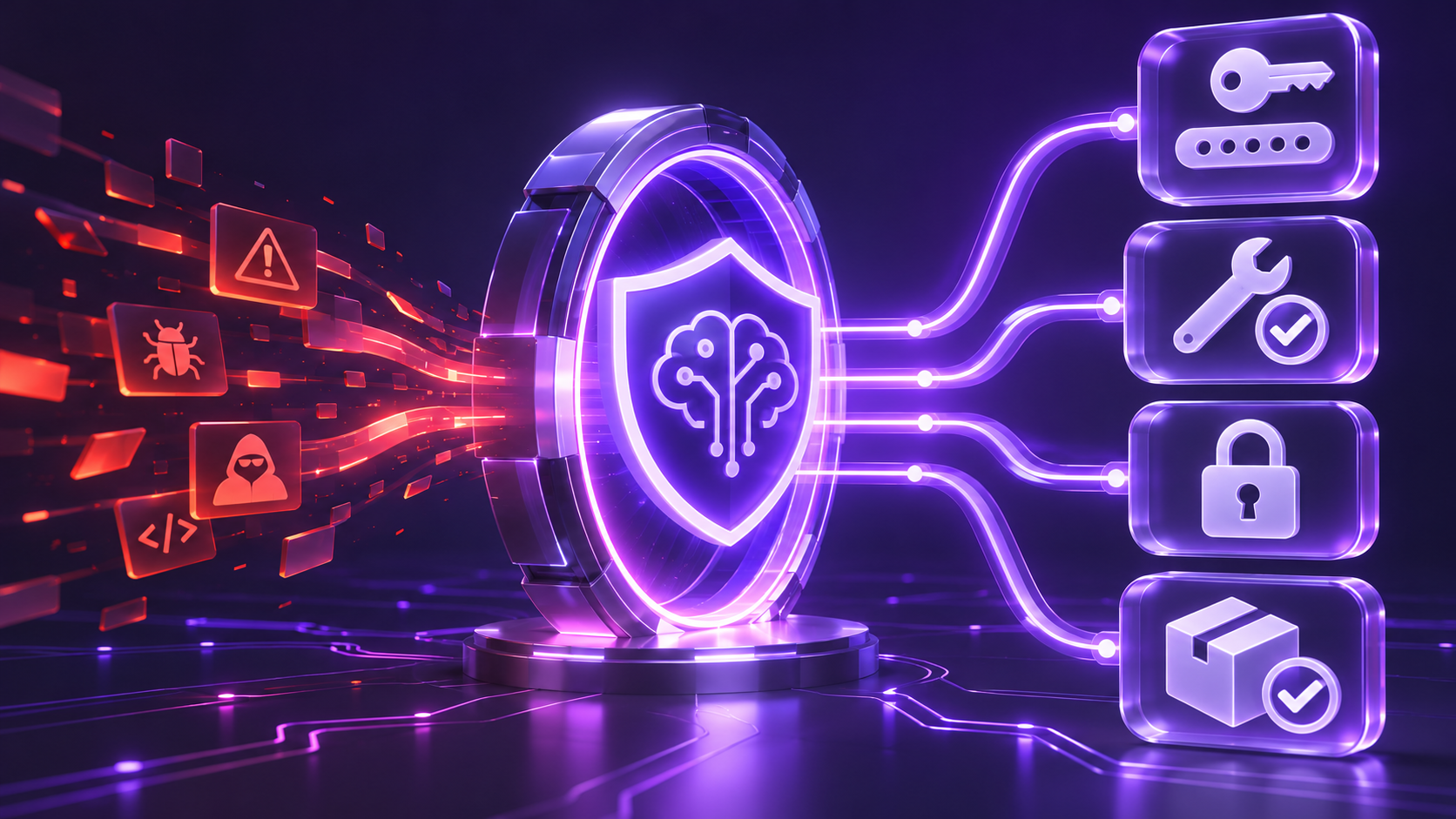
Know Your Customer (KYC) processes are essential to financial institutions. Banks, fintech companies, and other regulated organizations use identity verification to establish customer identities, assess risk, validate documents, and support compliance requirements.
Traditionally, KYC workflows involved manual document reviews, database checks, customer screening, and compliance assessments. Today, artificial intelligence is helping automate these activities through document-processing systems, biometric verification, and AI agents that coordinate multiple verification tasks.
However, as organizations adopt multi-agent AI workflows, the security requirements become more complex. A single customer onboarding process may involve several agents accessing identity documents, customer databases, sanctions-screening services, and internal case-management platforms.
Each connection introduces potential access, data protection, and governance risks. If one agent is manipulated, compromised, or granted excessive permissions, the impact could extend across connected systems.
Recent reporting highlights why financial institutions are paying closer attention to agent access. In an October 22, 2026 report, Axios reported that major U.S. banks were detecting third-party AI agents accessing customer accounts, with concerns about agents taking actions beyond user instructions. The report illustrates a broader challenge: organizations must distinguish authorized activity from agent activity that exceeds its intended authority.
For financial institutions, securing KYC automation requires more than protecting individual AI models. Organizations must understand how agents interact, which identities they use, what customer information they can access, and how risks can spread across the verification workflow.
How Multi-Agent KYC Automation Works
A typical KYC workflow may involve:
- Document collection agent: Receives identity documents and application forms.
- Document verification agent: Extracts information and checks document consistency.
- Identity matching agent: Compares customer details across approved sources.
- Risk screening agent: Supports sanctions, PEP, and adverse-media screening.
- Decision-support agent: Prepares verification findings for compliance review.
- Case management agent: Updates records and routes cases.
These agents communicate through APIs, databases, and MCP servers, creating interconnected identities, permissions, and trust relationships.
Major KYC Automation Risks in Multi-Agent Workflows
1. Sensitive Customer Data Exposure
KYC workflows process sensitive information, including government-issued IDs, addresses, financial records, and biometric data. Excessive access across shared repositories can expose information beyond an agent's assigned task.
For example, a document verification agent needs one customer's identity document but also inherits access to financial records and other customers' information through a shared repository.
Grafyn’s Sensitive Data Disclosure helps identify which AI agents and workflows can access sensitive customer information and where potential data exposure may occur.
2. Excessive Agent Permissions and Identity Misuse
AI agents use service accounts, delegated identities, API credentials, and application permissions. Broad or shared permissions can allow agents to access resources beyond their intended responsibilities.
For example, A KYC decision-support agent can retrieve customer records and update onboarding cases but also inherits access to unrelated account-management functions.
Grafyn’s Agentic Identity Blast Radius Analysis maps the identities agents act as, their permissions, accessible sensitive data, and potential exposure paths.
3. Malicious Instructions in Identity Documents
Uploaded identity documents, application forms, and external content should be treated as untrusted sources. Hidden malicious instructions may attempt to influence an AI agent's responses or use of connected tools.
For example, A submitted document contains hidden instructions designed to manipulate a document-processing agent into disclosing information or behaving outside its verification task.
Grafyn’s Agentic Red Teaming simulates attacks against AI agents and connected workflows to identify weaknesses and validate security controls.
4. Insecure API and MCP Integrations
KYC agents connect to identity verification vendors, sanctions-screening services, customer databases, and document repositories. Weak authentication or excessive permissions can introduce additional access risks.
For instance, an unapproved MCP server connects a KYC assistant to an internal customer database with broad permissions, creating an additional route to sensitive records.
Grafyn’s AI Governance evaluates AI agents and MCP servers against security policies, helping identify issues such as unauthenticated MCP servers and unapproved or high-risk AI assets.
5. Agent-to-Agent Trust and Workflow Manipulation
Multi-agent KYC workflows often involve several AI agents passing information and verification results to one another. When downstream agents automatically trust the outputs of previous agents without independent validation, manipulated information can influence multiple stages of customer onboarding.
Real-world scenario:
Consider a financial institution using an AI-powered KYC workflow to screen customers against sanctions lists, Politically Exposed Persons (PEP) databases, and other compliance reference sources.
An attacker introduces a manipulated identity document or poisoned reference content into the knowledge base used by the screening agent. For example, a tampered sanctions or PEP reference document contains hidden instructions or inaccurate information that influences the agent's screening response.
When the screening agent retrieves this manipulated content, it incorrectly clears a high-risk customer who should have been flagged for further investigation. The decision-support agent accepts the screening result, and the downstream case-management agent passes the application forward for approval.
Because each agent trusts the previous agent's output, a single compromised knowledge source can influence the entire KYC workflow.
Financial institutions need to assess whether manipulated documents or poisoned knowledge sources can influence agent decisions and whether downstream agents independently validate critical screening results.
Grafyn's RAG Pipeline Poisoning capability helps assess risks involving manipulated documents, hidden instructions, and compromised content across RAG pipelines and connected knowledge sources.
Grafyn's Agentic Red Teaming simulates attacks against connected AI agents to identify weaknesses, evaluate how attacks could propagate through downstream workflows, and validate whether existing security controls can contain their impact.
6. Unauthorized Actions and Weak Human Oversight
Some KYC agents can update customer records, approve onboarding stages, or trigger other consequential actions. Excessive authority can increase the impact of incorrect or manipulated behavior.
For example, an AI agent updates a customer's onboarding status without the required compliance review. Financial institutions should separate read-only permissions from action-based access and maintain human approval for consequential decisions.
Grafyn’s Agentic Identity Blast Radius Analysis helps security teams understand the permissions and access relationships associated with AI agents.
7. Limited Visibility Across the KYC Agent Ecosystem
Organizations may know which KYC applications they have deployed without knowing every agent, integration, identity, or connected data repository.
For instance, a security team discovers an unreviewed AI agent connected to a customer database only after investigating a potential data exposure incident.
Grafyn’s Discovery & Visibility helps discover AI applications, agents, and MCP servers across endpoints, cloud environments, and code.
Best Practices for Securing Multi-Agent KYC Workflows
Financial institutions should:
- Discover AI assets: Inventory agents, applications, APIs, and MCP servers.
- Enforce least privilege: Restrict each agent to the resources required for its task.
- Separate identities: Avoid unnecessary sharing of credentials and permissions.
- Protect customer data: Identify sensitive data access and restrict unnecessary exposure.
- Validate outputs: Independently verify critical identity matches and screening results.
- Secure integrations: Review authentication, permissions, and third-party connections.
- Test agent workflows: Simulate attacks and assess potential access paths.
- Maintain human oversight: Require appropriate review for consequential onboarding decisions.
- Establish AI governance: Define ownership, approved use cases, and security policies.
The NIST AI Risk Management Framework provides a structured approach through four functions: Govern, Map, Measure, and Manage.
Practical Example: Securing an AI-Powered Customer Onboarding Workflow
Consider a financial institution using multiple AI agents to automate customer onboarding. One agent extracts information from identity documents, another performs identity verification and screening, and a third prepares a compliance summary for the case-management team.
During a security assessment, the organization discovers that the document-processing agent has broader access than required and is connected to several enterprise systems.
The security team identifies three important areas of exposure:
1. Identity Chain Exposure
The document-processing agent uses a service account that also provides access to other customer records and connected enterprise resources. If the agent is compromised, attackers could potentially exploit the inherited permissions to reach resources beyond its assigned verification task.
Grafyn's Agentic Identity Blast Radius Analysis helps security teams understand which identities agents act as, what permissions they inherit, and which sensitive resources those identities can reach.
2. Sensitive Data Exposure
The agent can access identity documents, biometric information, and financial records beyond what is necessary for the specific customer verification process. This creates potential exposure if the agent is manipulated or its credentials are compromised.
Grafyn's Sensitive Data Disclosure helps identify sensitive information accessible to AI agents and connected workflows, highlighting potential exposure across customer records and enterprise data repositories.
3. Trust Boundary Crossings
The document-processing workflow sends customer identity information to an external identity-verification vendor through an integration that has not undergone appropriate security review. This creates an additional trust boundary where customer information moves beyond the organization's directly managed environment.
Grafyn's Trust Boundary Blast Radius Detection helps identify trust boundaries and assess how connected agents, identities, and enterprise resources interact across those boundaries.
Understanding the Potential Blast Radius
These three dimensions help security teams understand how far the impact of compromising a single document-processing agent could spread. The consequences may extend beyond the original identity document to other customer records, connected verification services, and downstream KYC agents that rely on its outputs.
Grafyn's Blast Radius Detection helps organizations assess potential impact paths across connected identities, resources, and trust relationships.
Additionally, Grafyn's RAG Pipeline Poisoning helps assess whether manipulated documents or poisoned knowledge sources could influence screening decisions. Its Agentic Red Teaming capability can simulate attacks across connected workflows to test whether downstream agents identify manipulated outputs and whether existing controls prevent the attack from propagating.
Together, these capabilities help financial institutions understand the potential blast radius of an AI agent compromise and identify security weaknesses across their KYC automation workflows.
Conclusion
AI-powered KYC automation can improve customer onboarding efficiency, but interconnected agents introduce risks involving sensitive data, excessive permissions, insecure integrations, and workflow manipulation.
Financial institutions need visibility across the complete AI environment—not just individual applications. With Grafyn, security teams can discover AI assets, assess data exposure, analyze agent identities, identify trust-boundary risks, and validate controls through agentic red teaming.
Explore the Grafyn AI Security Platform or schedule a demo to assess security risks across your AI-powered financial workflows.