Artificial intelligence is changing how software and technology companies develop products, manage infrastructure, and deliver services. Developers use AI coding assistants to generate code, engineering teams deploy autonomous agents to automate workflows, and organizations integrate external AI models, APIs, plugins, and Model Context Protocol (MCP) servers into enterprise environments.
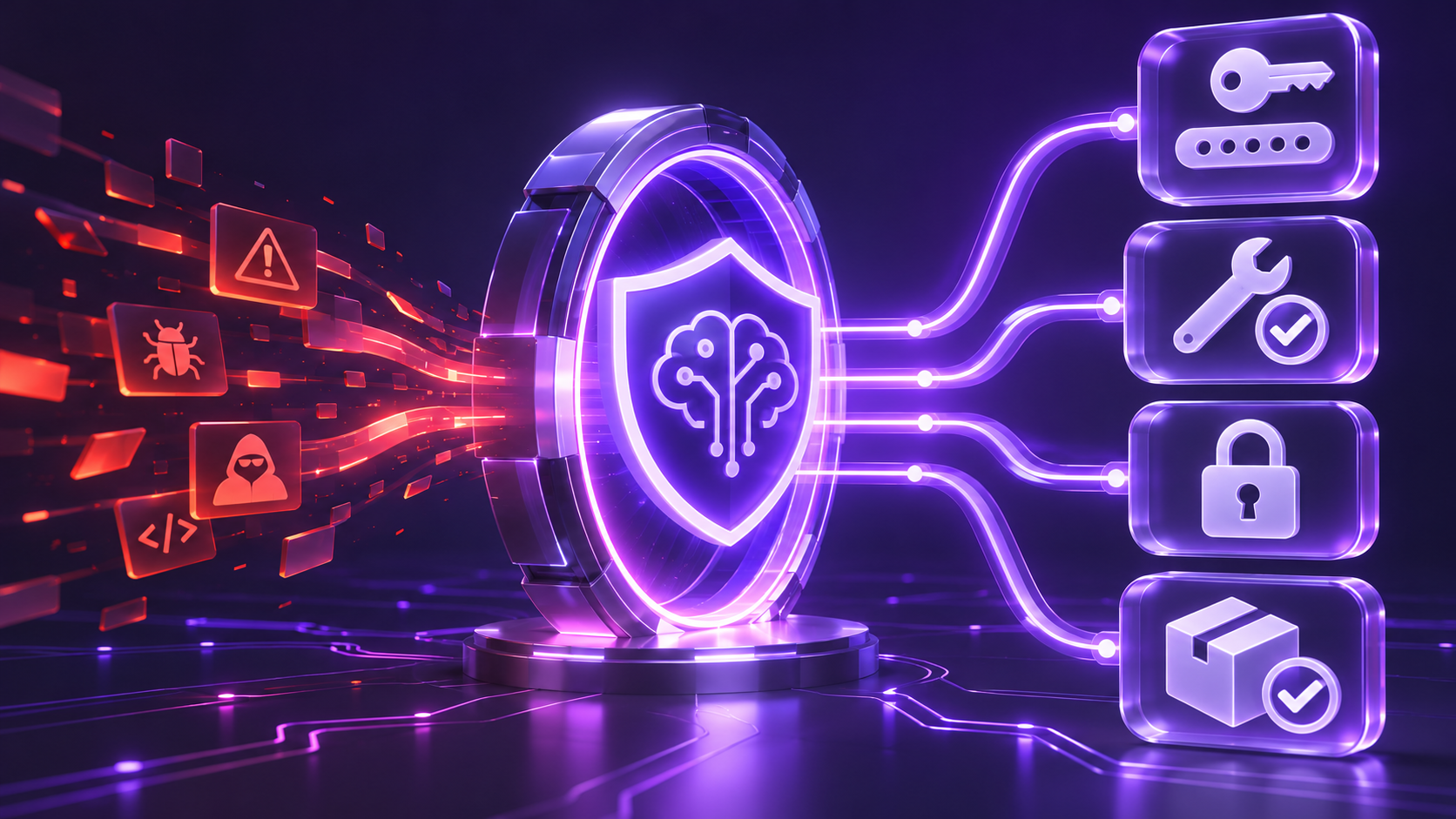
However, every new AI application and integration introduces security risks. AI coding assistants may access private source-code repositories, autonomous agents may inherit developer permissions, and MCP servers may connect AI applications to internal databases, APIs, and enterprise tools. Without proper security controls, these connections can expose sensitive information and enterprise resources.
According to Microsoft research on MCP security weaknesses, in May 2026, Microsoft Security researchers reported observing exposed MCP servers deployed without authentication. According to their research, some configurations allowed unauthenticated interaction with sensitive internal tools, including ticketing systems, HR systems, and private code repositories.
With the growth of agentic AI, organizations must understand which AI tools are being used, which identities and permissions they inherit, what sensitive data they can access, and how far their connections extend across enterprise systems.
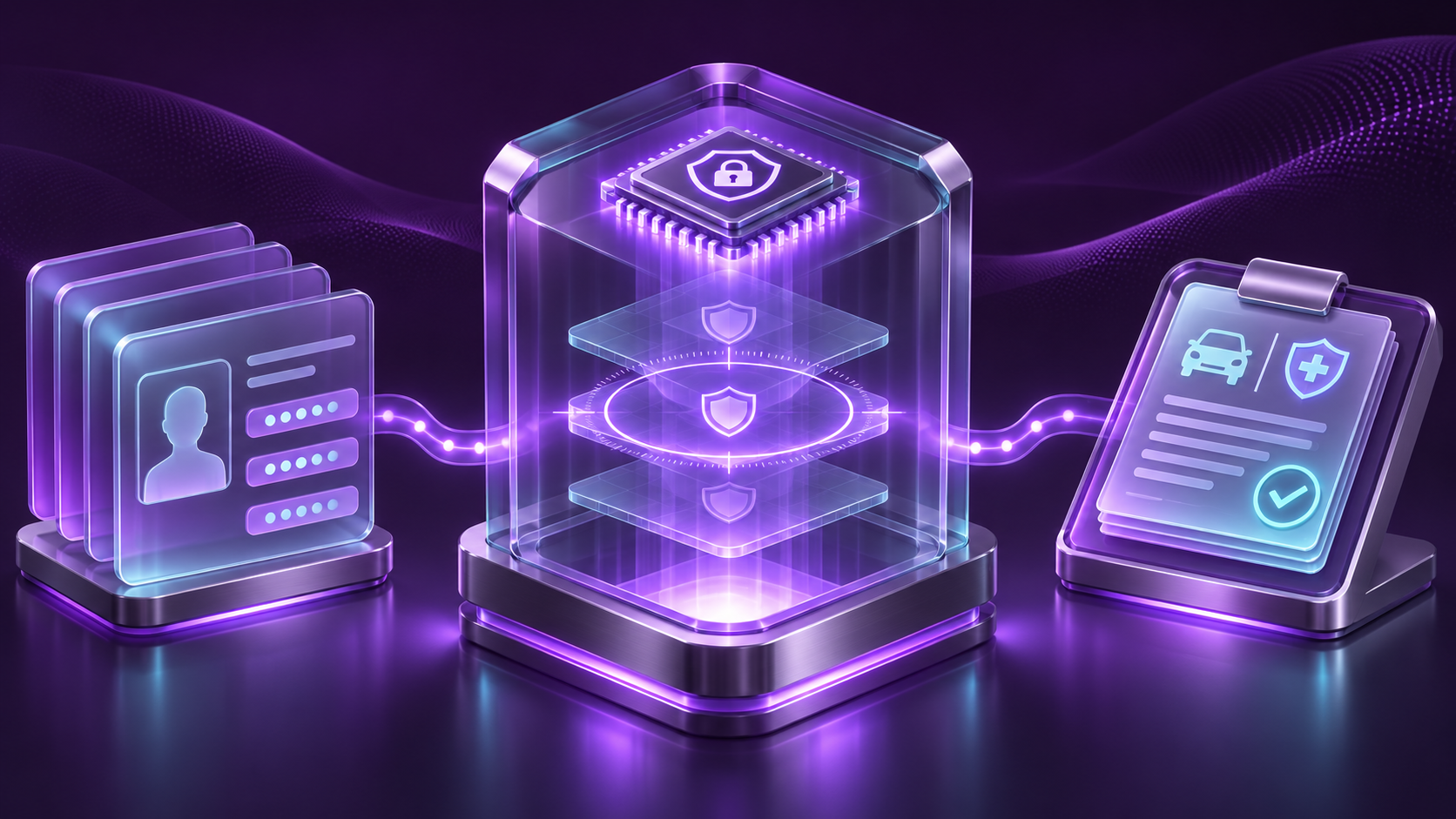
For CISOs, CTOs, security architects, and engineering leaders, Grafyn's AI Security Platform helps address these challenges by discovering AI applications, agents, coding assistants, and MCP servers across endpoints, cloud environments, and code. It maps their connections to identities, permissions, sensitive data, and enterprise systems, helping security teams identify exposure paths and assess potential blast radius through Sensitive Data Disclosure, Agentic Identity Blast Radius Analysis, Trust Boundary Blast Radius Detection, Agentic Red Teaming, and AI Governance.
Why AI Security Matters for Software and Technology Companies
Software companies increasingly use AI across development, testing, customer support, infrastructure management, and internal operations.
These deployments may include:
- AI coding assistants and development copilots.
- Autonomous agents connected to code repositories.
- AI-powered testing and debugging applications.
- MCP servers and third-party tool integrations.
- Internal knowledge assistants connected to enterprise documents.
- Customer support agents connected to CRM platforms.
- AI applications accessing cloud environments and APIs.
Unlike conventional applications, AI agents can interpret instructions, retrieve information, select tools, and perform actions through connected identities.
Consider a development agent connected to a private code repository, internal documentation, and deployment tools. If its identity has excessive permissions, a compromised or manipulated agent could potentially reach resources beyond its intended development task.
Organizations therefore need to understand the relationships between AI assets, identities, permissions, sensitive data, and connected systems.
Major AI Security Risks in Software and Technology Companies
1. Shadow AI: Unapproved AI Tools Across Development Environments
Shadow AI refers to AI applications, agents, browser extensions, coding assistants, and other AI services used without appropriate organizational approval, visibility, or security oversight.
Developers may introduce public AI assistants, third-party plugins, or independently configured agents to improve productivity. However, security teams may not know what information these tools access or which external services receive that information.
For example, Samsung's confidential code disclosure: In 2023, Samsung employees reportedly uploaded confidential source code and internal meeting information to ChatGPT while using the service for work-related tasks. The incident highlighted the risk of employees sharing proprietary information with external AI platforms without adequate organizational controls.
What companies should learn: Restricting AI usage alone does not solve the problem. Organizations need visibility into which AI applications employees use and whether those applications access sensitive enterprise information.
Grafyn's Discovery & Visibility capability helps discover AI assets across endpoints, cloud environments, and code. Its Shadow AI capability identifies unsanctioned AI tools, agents, and applications across enterprise environments.
2. Sensitive Data Exposure Through AI Applications and Agents
Software and technology companies manage valuable information, including proprietary source code, product designs, customer records, technical documentation, credentials, and internal business information. As organizations adopt AI tools and integrate AI-powered features into their own products, sensitive data can become exposed through connected applications, agents, and workflows.
One key risk is cross-customer data exposure in multi-tenant SaaS applications. When an AI feature retrieves information without properly scoping access to the relevant customer or tenant, it may include one customer's records in another customer's response.
For example, a SaaS company introduces an in-product AI assistant that helps customers search support tickets and account information. A customer asks the assistant to summarize their recent support history, but the retrieval process is not correctly scoped to that customer's tenant. As a result, the assistant may retrieve and include another customer's support records in its answer. This can expose confidential business information and undermine customer trust.
A similar risk can occur internally. For example, a developer connects an AI coding assistant to a private repository to troubleshoot an application. The assistant retrieves configuration files and technical documentation containing sensitive information. If the connected identity has access to multiple repositories, the potential exposure may extend beyond the developer's immediate task.
Security teams therefore need visibility into which customer and enterprise data AI applications and agents can access, including information exposed through prompts, files, repositories, and connected workflows.
Grafyn's Sensitive Data Disclosure capability helps identify customer and enterprise data accessible through AI applications and agents. It provides visibility into where sensitive information may be exposed across AI prompts, files, agents, and connected workflows, helping security teams assess potential data exposure risks. This visibility can support the assessment of cross-customer and internal data exposure risks, while application teams remain responsible for implementing and enforcing tenant-level retrieval permissions and access controls.
3. AI Agent Identity Risks and Excessive Permissions
AI agents often operate through user identities, service accounts, API keys, tokens, and delegated permissions. These identities determine which enterprise applications, databases, and resources an agent can access. When an agent inherits broader permissions than required, its effective reach can extend beyond its intended purpose.
For example, a development agent is configured to retrieve source code and create development tickets. However, the identity it operates through also has access to deployment environments and additional private repositories. If the agent is compromised or manipulated, these inherited permissions could increase the potential impact.
Companies should understand which identities agents act as, which permissions they use, and what resources those identities can reach.
Grafyn's Agentic Identity Blast Radius Analysis maps agent identities, permissions, and accessible resources to help security teams understand potential exposure and blast radius.
4. Insecure MCP Servers, Plugins and Third-Party Integrations
Software companies increasingly connect AI applications and agents to APIs, plugins, MCP servers, vector databases, and third-party services to extend their functionality and automate tasks.
These integrations create additional dependencies, permissions, and trust relationships within the enterprise environment. An insecure MCP server or poorly configured third-party integration may provide an unintended access path to internal repositories, databases, business applications, and other enterprise resources.
This makes MCP and integration security an important part of enterprise AI security. Organizations need to understand which servers and tools are connected, how they are authenticated, what permissions they receive, and which resources they can access.
Key MCP security risks include:
- Unapproved MCP servers: Unreviewed servers may connect AI agents to internal systems without an appropriate security assessment.
- Missing authentication: MCP servers without proper authentication may expose connected tools and resources to unauthorized access.
- Excessive permissions: Connected agents may receive broader access to repositories, databases, and enterprise applications than their assigned tasks require.
- Tool poisoning: Malicious or manipulated tool descriptions and metadata may influence agent behavior and lead to unintended tool use.
- MCP rug-pull risks: A previously trusted server or tool may change its functionality after approval, introducing new security risks.
- Untrusted tool outputs: External tool responses may contain malicious or misleading content that influences subsequent agent actions.
Organizations should authenticate MCP clients and servers, enforce least-privilege permissions, review tool configurations, validate external outputs, and reassess integrations whenever their functionality or access requirements change.
Grafyn's MCP Security capabilities help organizations gain visibility into MCP servers and connected integrations, assess their security policies, and identify potential exposure across connected systems. This helps security teams understand how AI agents interact with tools and enterprise resources and assess risks associated with their permissions and trust relationships.
Read more - MCP Security: Risks, Permissions and Enterprise Best Practices
5. AI Agent Red Teaming and Attack Path Validation
AI agents connected to source-code repositories, documentation, issue trackers, APIs, and third-party services can introduce security weaknesses across enterprise environments. If an agent has excessive permissions or insecure connections, a compromised workflow could expose sensitive data or provide access to connected systems.
In June 2026, Microsoft Security researchers disclosed an exploit chain called AutoJack involving AutoGen Studio. Their research demonstrated how untrusted web content processed by a browsing agent could reach a local MCP WebSocket and potentially lead to arbitrary process execution on the host. Microsoft stated that the issue was reported to the maintainers and hardened during development, and that the affected MCP WebSocket surface was not included in a PyPI release.
The research highlights why organizations must assess how AI agents connect to tools, identities, data, and local services and how far an attack could spread if one connection is compromised.
A similar risk can arise when an AI coding agent retrieves a README file, code comment, or internal wiki page containing hidden malicious instructions. If the agent treats this content as trusted context, those instructions could influence its actions or interactions with connected tools. This is also relevant to RAG and vector database poisoning, where manipulated documents or retrieved content can influence an AI assistant's responses and downstream actions.
Grafyn's RAG Pipeline Poisoning capability helps organizations assess risks associated with manipulated documents, poisoned knowledge sources, and malicious instructions embedded in content retrieved by AI systems. Agentic Red Teaming runs realistic attack simulations against AI agents to identify security weaknesses and evaluate how attacks could propagate through connected tools, identities, sensitive data, and enterprise systems. Together, these capabilities help security teams understand potential attack paths, assess the blast radius, and evaluate whether existing security controls can contain attacks.
Read more - AI Red Teaming Best Practices for Agentic AI in 2026
6. AI Blast Radius Across Connected Enterprise Systems
An AI agent's potential impact is determined not only by its original purpose but also by the identities, permissions, data, tools, and systems it can reach.
A compromised or manipulated agent may create exposure beyond the application in which it operates.
For example, an autonomous development agent has access to source-code repositories, internal documentation, project management tools, and deployment resources. If its connected identity has excessive permissions, an attack involving the agent could potentially affect several connected systems.
Security teams need to understand three important dimensions:
- Identity: Which identities does the agent act as, and what permissions does it inherit?
- Data: What sensitive information can the agent access, and where could that information be exposed?
- Trust: Which internal and external systems can the agent reach, and where are trust boundaries crossed?
Grafyn helps organizations assess these relationships through Agentic Identity Blast Radius Analysis, Sensitive Data Disclosure, and Trust Boundary Blast Radius Detection.
7. Weak AI Governance and Security Control Gaps
As software companies introduce more AI applications and autonomous agents, maintaining consistent governance becomes increasingly important.
Different engineering and business teams may introduce AI tools, connect third-party services, or configure agents without a centralized review process. This can create gaps in asset ownership, security assessment, access management, and policy enforcement.
Organizations should establish processes to:
- Identify approved and unapproved AI assets.
- Define ownership and accountability.
- Review AI agent identities and permissions.
- Assess sensitive data exposure.
- Establish security policies for MCP servers and integrations.
- Reassess newly discovered AI assets and configuration changes.
- Maintain appropriate governance and audit processes.
The NIST AI Risk Management Framework provides a structured approach through its Govern, Map, Measure, and Manage functions.
Grafyn's AI Governance capabilities support built-in and custom policy evaluations across agents, MCP servers, and endpoints. Scheduled evaluations can flag unapproved or high-risk agents, newly discovered unreviewed assets, and MCP servers without authentication. Violations are surfaced through the dashboard and email alerts.
Read more - AI Governance vs. AI Security: What Is the Difference?
Best Practices for AI Security in Software and Technology Companies
Organizations need a structured approach to secure AI applications and connected enterprise systems.
- Discover all AI assets: Identify AI applications, coding assistants, agents, browser extensions, MCP servers, and third-party integrations across endpoints, cloud environments, and code. Grafyn's Discovery & Visibility helps discover approved and unapproved AI assets and map their connections across the enterprise.
- Assess sensitive data exposure: Understand which AI agents and workflows can access proprietary source code, credentials, customer information, and internal documentation. Grafyn's Sensitive Data Disclosure identifies sensitive information accessible to AI agents and workflows, helping security teams understand potential exposure paths.
- Analyze agent identities: Review user identities, service accounts, API keys, and inherited permissions associated with AI agents. Grafyn's Agentic Identity Blast Radius Analysis maps the identities agents act as, their permissions, and the sensitive resources they can reach.
- Secure MCP integrations: Enforce authentication, authorization, least-privilege permissions, and appropriate tool restrictions.Grafyn helps discover MCP servers, identify security policy violations, and assess the risks associated with their connections and permissions.
- Map trust boundaries: Identify internal and external systems accessible through agents, APIs, and connected services. Grafyn's Trust Boundary Blast Radius Detection maps trust relationships and identifies potential exposure paths across connected systems.
- Conduct agentic red teaming: Simulate attacks involving prompt injection, tool misuse, sensitive data exposure, and unauthorized access paths. Grafyn's Agentic Red Teaming runs realistic attack simulations against AI agents to identify weaknesses and assess how attacks could spread through connected tools, identities, data, and systems.
- Establish AI governance: Define ownership, approved usage, security policies, and scheduled assessments for AI deployments. Grafyn's AI Governance supports built-in and custom policies across AI agents, MCP servers, and endpoints, helping teams identify policy violations and strengthen oversight.
Explore the Grafyn AI Security Platform to understand how it supports enterprise AI security requirements.
Read more - Responsible AI Framework: Principles, Components & Future
Conclusion: Secure AI Before Its Connections Expand the Risk
AI is becoming deeply integrated into software development, engineering operations, and enterprise technology environments. While these systems improve productivity, every new agent, identity, integration, and data connection introduces security considerations.
Real-world incidents involving employee data disclosure and research into vulnerable AI agent integrations demonstrate why organizations need to look beyond the AI model itself.
The priority is to understand what AI is operating across the environment, which identities it uses, what sensitive data it can access, and how far its connected systems extend.
For software and technology companies, effective AI security starts with discovery and continues through sensitive data exposure assessment, identity analysis, trust-boundary mapping, agentic red teaming, and governance.
You cannot secure what you cannot see. And you cannot reduce your AI blast radius without understanding what connects, what is exposed, and what could spread.
Explore Grafyn AI Security and discover how to assess and reduce your enterprise AI blast radius.